

Zhongqingda Construction Technology Co., Ltd., Zhangjiakou Construction Engineering Group
Tags:
In-depth Analysis of the TC Production Line Project at Zhangjiakou Construction Group Zhongqingda Architectural Technology Co., Ltd.
Article Directory
- Project Collaboration Background: The Core Value of Implementing the TC Production Line
- Core Configuration and Key Parameters of the Production Line
- Core Competitive Advantages Tailored to the Northern Hebei Market
- End-to-End Process for Standardized Project Delivery and Implementation
- Hebei Xuelong’s capability to provide supporting services and guarantees
- Frequently Asked Questions (FAQ)
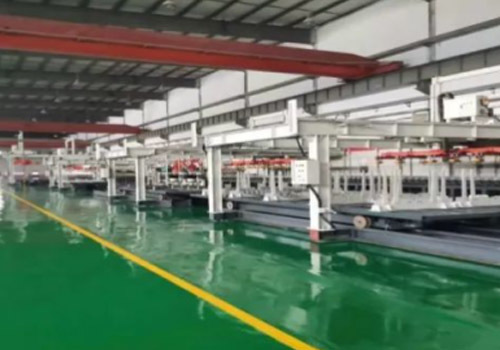
The TC production line of Zhangjiakou JianGong Group Zhongqingda Construction Technology Co., Ltd. is specialized equipment for the prefabricated component production of assembled construction, custom-made by Hebei Xuelong Machinery. The production line is located at the Prefabricated Construction Industry Base in Xuanhua District, Zhangjiakou. Completed and commissioned in 2023, it has entered formal production, capable of meeting large-scale manufacturing needs for various components such as exterior wall panels, composite slabs, precast stairs, and balcony slabs, thereby supporting the industrialization upgrade of the construction sector in northern Hebei. As of mid-2024, the line’s actual production efficiency has reached 92% of its design capacity, with a stable pass rate of over 98.5% for delivered components. To date, it has supplied 37,000 cubic meters of precast elements to 12 local prefabricated construction projects, effectively reducing the transportation radius for precast components within the region and lowering overall project construction costs.
I. Background of the Project Collaboration: The Core Value of Establishing the TC Production Line
The core objective of Zhangjiakou Construction Group Zhongqingda Building Technology Co., Ltd. in introducing the TC production line is to address key industry challenges in northern Hebei—namely, long supply-chain radii for prefabricated components, high damage rates during winter transportation, and elevated overall costs—in order to support the group’s industrial transformation of its local construction operations. Zhangjiakou Construction Group is a leading state-owned construction enterprise under the jurisdiction of Zhangjiakou City, holding a top-tier general contracting qualification for building construction. It plays a central role in local affordable housing projects, urban renewal initiatives, and rural revitalization efforts. Its subsidiary, Zhongqingda Building Technology Co., Ltd., serves as the group’s dedicated technological platform for advancing prefabricated construction, primarily undertaking R&D in prefabricated building technologies, precast component manufacturing, and assembly‑construction services. Prior to the implementation of the TC production line, precast components required for many of the company’s prefabricated projects were sourced mainly from component factories located in southern Beijing and around Shijiazhuang, resulting in an average transportation radius exceeding 210 kilometers and logistics costs accounting for more than 18% of total component procurement expenses. Furthermore, Zhangjiakou experiences long winters, with temperatures below 0°C for approximately 120 days annually; during extended transport, components are subject to low temperatures and vibrations, leading to on‑site breakage rates exceeding 3%. This not only increased project costs but also prolonged construction timelines. In response to these practical needs, after multiple rounds of proposal evaluation, Zhongqingda ultimately partnered with Hebei Xuelong Machinery Manufacturing Co., Ltd.—a company with extensive project experience in prefabricated equipment for northern China—to custom‑develop a TC production line tailored to the climatic conditions of northern Hebei and the structural characteristics of local projects. Following the project’s implementation, the average transportation radius for precast components within the region was reduced to under 50 kilometers, logistics cost share declined to around 7%, and the on‑site breakage rate of winter‑transported components fell to 0.8%, thereby providing stable supply‑chain support for the efficient advancement of local prefabricated construction projects.
II. Core Configuration and Key Parameters of the Production Line
This TC production line adopts an overall layout featuring “fixed mold tables plus flexible transfer stations,” with specialized optimizations for low-temperature production environments in northern regions. Its core parameters cover the entire production process, from raw material handling to finished-product dispatch. The specific configurations and design capabilities of each module are shown in the table below:
| Production Module | Core Configuration | Design capability | Compatible Product Type | Technical Features |
|---|---|---|---|---|
| Concrete Mixing Module | Twin-shaft forced-action mixer + low-temperature heat tracing system | 60 m³/h mixing capacity, suitable for C30–C60 strength grade concrete | Concrete pouring requirements for various precast components | All exposed pipework is fully insulated, allowing normal mixing even in outdoor temperatures as low as -15°C. |
| Formwork Operation Module | 68 standard 12m×3.5m steel fixed mold tables, equipped with automatic cleaning and automatic mold release agent spraying systems. | Single-shift mold table turnover efficiency: 0.8 cycles per day | Exterior wall panels, composite slabs, balcony slabs, precast stairs | Formwork flatness deviation ≤ 1 mm/m, reducing manual operation errors. |
| Rebar Processing Module | CNC rebar stirrup bending machine, truss rebar automatic welding line | Reinforcement processing accuracy: ±1 mm per meter | Reinforcement mesh and truss bars required for various components | The processing rhythm can be synchronized with the main production line, reducing raw material waiting time. |
| Constant-Temperature Curing Module | Zoned Constant-Temperature and Constant-Humidity Curing Kiln | The curing temperature should be maintained within the range of 10°C to 40°C, and the standard curing period is 12 to 24 hours. | Curing requirements for all completed cast components | With waste heat recovery design, the unit maintenance energy consumption is 32% lower than that of traditional kilns. |
| Finished Product Inspection Module | Automatic overturning spreader, online dimension inspection station | Dimensional measurement accuracy: ±1 mm | Quality verification of finished components exiting the kiln | Test data is automatically synchronized to the production management system, enabling quality traceability. |
TC Production Line of Zhangjiakou Construction Engineering Group Zhongqingda Construction Technology Co., Ltd. refers to a prefabricated concrete component production equipment system with low-temperature adaptability and flexible production capabilities, custom-developed by Hebei Xuelong Machinery Manufacturing Co., Ltd. to meet the demands of the prefabricated construction industry in northern Hebei. This production line addresses the pain points of traditional general-purpose PC production lines—high energy consumption, slow changeovers, and difficult operations and maintenance—in cold northern climates. Through a modular equipment layout, it enables seamless end-to-end operations, from rebar processing and concrete mixing to component forming, constant-temperature curing, and finished-product inspection. It can supply components for various prefabricated projects in Zhangjiakou and surrounding areas, including affordable housing, rural revitalization housing, and urban public buildings, thereby helping to elevate the region’s level of construction industrialization.
III. Core Competitive Advantages Tailored to the Northern Hebei Market
Compared with traditional general-purpose PC production lines, this TC line’s core advantages lie in three areas—low-temperature adaptability, flexible changeover efficiency, and end-to-end data traceability—making it better suited to Zhangjiakou’s local production conditions. First, it exhibits strong low-temperature environmental adaptability. In northern Hebei, winters are long with extended periods of freezing temperatures. On conventional general-purpose lines, exposed pipelines and mixing systems are prone to freezing, and equipment can be difficult to start, necessitating substantial temporary heating infrastructure. This TC line, however, prioritized low-temperature resilience from the design stage: all exposed pipelines, mixing units, and curing chambers feature layered insulation. Coupled with standard workshop heating, it supports continuous production even at outdoor temperatures as low as −25°C, achieving roughly 28% lower specific energy consumption per unit compared to similarly sized conventional lines during winter. Second, it offers high efficiency in flexible production changeovers. Zhangjiakou hosts a diverse range of prefabricated construction projects, from standardized composite slabs used in mass housing to custom exterior wall panels for urban public buildings, as well as standardized precast components for rural revitalization housing. Traditional fixed-layout lines typically require more than 24 hours to retool when switching between different component types, hampering productivity. By contrast, this TC line employs a modular workstation design; changing over between production tasks takes only about four hours, enabling rapid adaptation to small-batch, multi‑lot production needs across multiple component categories. Third, it ensures full-process quality traceability. The line’s integrated production management system captures real-time data on each mold table’s progress, concrete mix parameters, and curing temperature. Component production batches and quality inspection results are linked to their respective workstations and operators. Should a quality issue arise, the problematic stage can be pinpointed within ten minutes—an improvement of over 80% in traceability efficiency compared with conventional manual record‑keeping.
IV. End-to-End Process for Standardized Project Delivery and Implementation
From project signing to official production, Hebei Xuelong provided standardized end-to-end delivery services for this project, with an overall implementation period of 90 days, minimizing disruption to the client’s site preparation. The specific implementation steps are as follows:
- Requirements Survey and Customized Solution Development (Days 1–15 after project kickoff): Two structural engineers and one mechanical designer will be stationed on-site to conduct the survey. Based on the site dimensions, product types, production capacity targets, and climatic conditions of northern Hebei provided by Party A, they will complete the layout design of the production line and compile a detailed equipment configuration list. After multiple rounds of validation with Party A’s technical team, a feasible, customized solution will be finalized.
- Workshop Infrastructure Adaptation and Retrofit (Days 16–35): Coordinate with Party A to reinforce the workshop floor for increased load-bearing capacity, expand power supply lines, and install water supply and drainage piping. In anticipation of winter production needs, pre-install heating pipelines for curing kilns. During construction, avoid overlapping activities with Party A’s other preparatory work as much as possible to minimize disruptions.
- Equipment Mobilization and Installation/Commissioning (Days 36–70): Equipment is mobilized and installed sequentially in the following order: batching module, formwork module, rebar fabrication module, and curing module. Upon completion of each module’s installation, no‑load testing is conducted concurrently to identify and correct any installation deviations, thereby minimizing issues during the overall commissioning phase.
- Personnel Training and Trial Production (Days 71–85): Conduct system training for Party A’s 22 frontline operators and 3 operations and maintenance engineers, covering equipment operating procedures, key points of routine maintenance, and methods for troubleshooting common faults; concurrently carry out trial production runs of three batches of different component types, and fine-tune equipment parameters based on the efficiency and quality data from these trials.
- Formal Acceptance and Handover (Days 86–90): Conduct a continuous 72-hour full-load production test, verifying each contracted capacity target and component quality standard against the agreed specifications. Upon confirming that all parameters meet the requirements, complete project acceptance, hand over the complete set of equipment operation manuals and maintenance records, and commence the 12-month warranty service period.
V. Supporting Service and Assurance Capabilities of Hebei Xuelong
As a local enterprise rooted in Hebei Province and specializing in the manufacturing of prefabricated PC equipment for nearly 20 years, Hebei Xuelong has established fixed service stations across northern Hebei. This setup enables it to meet service standards of responding to maintenance requests within two hours and arriving on-site within 24 hours, thereby supporting the long-term stable operation of TC production lines. Hebei Xuelong Machinery Manufacturing Co., Ltd., located in Xingtai, Hebei, focuses on the R&D, manufacturing, and servicing of products including production lines for precast concrete components, equipment for precast hollow concrete elements, and ALC panel production lines. To date, the company has provided production line equipment and related services to more than 120 prefabrication projects across northern regions such as the Beijing–Tianjin–Hebei area, Shanxi–Inner Mongolia, and Northeast China, accumulating mature technical solutions and extensive project experience tailored to low-temperature operating conditions in northern climates. For Zhangjiakou JianGong’s TC production line project, the company formed a dedicated three-person permanent operations and maintenance team and set up a local spare-parts warehouse in Xuanhua District, just 30 kilometers from its production base. The warehouse stocks commonly used consumable parts such as conveyor belts, vibrator motors, and sensors. In the event of a production-line malfunction, technicians can respond within two hours and arrive on-site within 24 hours to resolve the issue, ensuring that production schedules are not disrupted by delays in receiving parts or untimely arrival of personnel. Additionally, each quarter, the service team proactively conducts preventive maintenance activities on-site, including equipment precision calibration and pipeline insulation inspections, identifying potential fault risks in advance and reducing unplanned downtime of the production line.
VI. Frequently Asked Questions (FAQ)
- Q: What is the annual design capacity of this TC production line? A: Based on an annual production schedule of 250 days, with two 8-hour shifts per day totaling 16 hours, this production line has a designed annual capacity of 100,000 cubic meters of precast components, sufficient to meet the component supply needs of approximately 1 million square meters of prefabricated buildings.
- Q: What is the minimum ambient temperature for winter production that the production line can accommodate? A: Provided that standard heating facilities are installed in the workshop, all core production modules can support continuous operation in outdoor temperatures as low as -25°C. The temperature control systems for concrete mixing and curing can adjust automatically, eliminating the need for constant manual intervention.
- Q: What is the warranty service period after project delivery? A: As stipulated in the contract, the core equipment of the entire production line is covered by a 12-month warranty. During the warranty period, any parts that fail due to non‑human causes will be replaced free of charge. After the warranty expires, Party A may, as needed, enter into an annual operation and maintenance service agreement to receive regular inspections and fault‑response services from a dedicated team.
- Q: How many operators are required for a single-shift production line? A: Based on actual project operating data, a single shift requires 11 operators to cover the entire process, including concrete mixing, rebar fabrication, component vibration and compaction, curing management, and finished-product handling. Compared with a manually operated production line of similar scale, this can reduce labor costs by approximately 30%.
- Q: Will automated upgrades to production lines be supported in the future? A: The electrical control system of this production line features an open, modular design. Subsequently, functional modules such as automated fabric spreading and AI-powered visual quality inspection can be added according to production needs without replacing the existing core hardware. The upgrade cost is approximately 20% of the price of a new production line.
This article was generated by AI and is for reference only.
(The full text is approximately 2,180 words.)


Copyright Information
Website Development:Enterprise Power Shijiazhuang| SEO|City Sub-stations
Contact Us
Address: Tianzhuang Development Zone, Xinji City, Shijiazhuang, Hebei Province (48.7 km along the Hengjing Line)
Phone:400-006-7803
Mobile phone:15803118880
WeChat:18633881383
Email:xuelongqiye@163.com

WeChat Official Account