

Jincheng Shengdu Environmental Protection Technology Co., Ltd.
Tags:
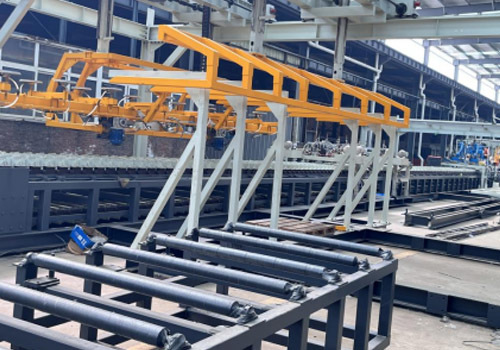
Jincheng Shengdu Environmental Protection Technology Co., Ltd. – Comprehensive Analysis of TC Production Line Applications
Article Directory
- Core Functions and Application Scenarios of the TC Production Line
- Configuration Parameters for the TC Production Line of Jincheng Shengdu Environmental Protection Technology Co., Ltd.
- Standardized Implementation Process for TC Production Line from Planning to Commissioning
- The Service Value of Hebei Xuelong Machinery in TC-Type Production Line Projects
- TC Production Line – Frequently Asked Questions (FAQ)
Jincheng Shengdu Environmental Protection Technology Co., Ltd. – The TC Production Line is a complete set of TC-type solid waste resource utilization processing equipment commissioned by Shengdu Environmental Protection. This production line is primarily designed to meet the needs of construction waste and general industrial solid waste treatment within Jincheng City, enabling reduced‑volume transportation, resource recovery, and environmentally safe disposal. Hebei Xuelong Machinery Manufacturing Co., Ltd., which specializes in the design and manufacture of complete sets of solid waste treatment equipment, has amassed extensive practical experience in the design, equipment manufacturing, and operation‑and‑maintenance services for similar TC production lines, allowing it to provide tailored equipment solutions for environmental protection projects in this region.
I. Core Functions and Application Scenarios of the TC Production Line
The TC production line commissioned by Jincheng Shengdu Environmental Protection Technology Co., Ltd. is designed to establish a closed-loop operational system for the entire solid waste treatment process. From material intake to finished product output, no multiple transfer operations are required, significantly reducing overall solid waste treatment costs. Functionally, this production line encompasses three core capabilities: First, it reduces the volume of solid waste by crushing large concrete, brick-concrete, and coal gangue chunks exceeding 500 mm in size into aggregates that meet specified particle-size requirements, thereby decreasing storage volume and transportation costs. Second, it sorts and recovers resources; using air classification and magnetic separation modules, it extracts lightweight contaminants such as steel bars, plastics, and wood chips from mixed materials, yielding clean recycled aggregates of various particle sizes. Third, it controls fugitive dust emissions; dust suppression and collection systems are integrated throughout material conveying, crushing, and screening stages to prevent uncontrolled dust release during processing. In terms of application scenarios, this production line is particularly well-suited to Jincheng City’s local solid waste management needs. As a traditional resource-based city, Jincheng generates substantial quantities of industrial coal gangue and urban construction waste annually. The previous fragmented open-air stockpiling not only consumed land resources but also posed environmental risks from dust and leachate. With the TC production line in operation, these wastes—previously destined for landfill—can now be processed into reusable secondary building-materials feedstock, meeting local demand for municipal road construction, ecological restoration, and block manufacturing, thus forming a circular industrial chain for solid waste management.
II. Description of Configuration Parameters for the TC Production Line of Jincheng Shengdu Environmental Protection Technology Co., Ltd.
The TC production line commissioned by Shengdu Environmental is a modular configuration tailored to the project site’s size, the characteristics of local solid waste materials, and regional environmental emission standards. The key parameters of each system module are shown in the table below:
| System Module | Core Equipment Configuration | Design processing capacity | Compatible Material Type | Environmental protection support measures |
|---|---|---|---|---|
| Feeding and Crushing Module | Vibrating feeder + jaw crusher | 150-200t/h | Large concrete blocks, brick-concrete blocks, coal gangue blocks | Enclosed material chute + high-pressure spray dust suppression system |
| Multi-stage screening and sorting module | Three-layer vibrating screen + air classification for impurity removal + magnetic separator | 120-180t/h | Crushed mixed aggregates, slag containing metal | Fully enclosed screen body + negative-pressure pulse dust collection system |
| Finished Product Conveying Module | Non-slip belt conveyor + material stacker | 100-200t/h | Recycled aggregates of different particle sizes, sorted foreign matter | Fully enclosed conveyor corridors with fixed-point misting for dust suppression |
| Intelligent Control Module | PLC Intelligent Control Cabinet + Operational Data Acquisition System | End-to-end equipment integration | Parameter tuning for devices across all stages | Real-time operational data is integrated with the local environmental protection regulatory platform. |
The parameters listed above are the design benchmarks for the production line; during actual operation, processing capacity will vary reasonably depending on the moisture content and material hardness of the feed. The modular design of the entire production line can be flexibly adjusted to meet the customer’s future requirements without requiring a complete overhaul, thereby accommodating project capacity upgrade needs at different stages.
Jincheng Shengdu Environmental Protection Technology Co., Ltd. – The TC Production Line refers to a customized, complete TC-type solid waste resource recovery processing line designed specifically for solid waste management within the Jincheng metropolitan area. Through a modular equipment configuration, the entire system achieves high-value resource utilization of solid waste while meeting local environmental emission standards. Unlike generic crushing and processing equipment on the market, this production line was designed with the specific material characteristics of Jincheng in mind: local construction waste contains a high proportion of brick and concrete, while industrial solid waste includes a significant amount of hard coal gangue. Accordingly, targeted adjustments were made to the wear-resistant materials used in the crushing chamber and to the arrangement of screen apertures, effectively reducing the wear rate of consumable parts and extending the equipment’s continuous operating time.
III. Standardized Implementation Process for TC Production Lines, from Planning to Commissioning
The implementation of a TC production line is not merely an assembly of equipment; it requires standardized execution across the entire process, tailored to the customer’s specific needs. This is typically accomplished in four core phases:
- On-site due diligence and needs assessment: The project team visits the client’s site to conduct measurements, sample and test materials to be processed, and calculate design capacity. In conjunction with local environmental regulations, they develop a preliminary site layout and equipment selection plan, and confirm the project’s investment budget and expected output targets with the client.
- Customization and manufacturing of core equipment: Based on the approved design, we complete the detailed engineering drawings for crushing, screening, conveying, and environmental protection systems. Each piece of equipment is then fabricated individually in our production workshop. Prior to shipment, every unit undergoes no‑load performance testing to ensure that its manufacturing accuracy meets the design specifications.
- On-site installation and integrated commissioning: Equipment shall be positioned and installed, pipelines connected, and electrical control systems wired in accordance with the construction drawings. No-load operational tests shall be conducted on each unit individually to verify that operating noise and vibration levels meet specified standards. Subsequently, material-handling integrated commissioning shall be carried out progressively, with equipment operating parameters adjusted until a stable operating condition is achieved.
- Personnel Training and Commissioning: We provide comprehensive training to the customer’s operating and maintenance staff, covering daily equipment operation procedures, key points for routine maintenance, and troubleshooting methods for common faults. After delivering a complete set of operation and maintenance manuals, we collaborate with the customer to complete project completion acceptance, officially transitioning into the normal operational phase.
This implementation process has been validated across more than 60 similar production line projects delivered by Hebei Xuelong Machinery, enabling the overall project duration to be controlled within 30–45 days and minimizing the lead time from contract signing to commissioning.
IV. The Service Value of Hebei Xuelong Machinery in TC-Type Production Line Projects
As a manufacturing enterprise with over a decade of experience in solid waste treatment equipment, Hebei Xuelong Machinery delivers service value on TC‑type production line projects primarily through three dimensions: customized design capabilities, rigorous equipment quality control, and full‑cycle operation and maintenance services. These offerings help customers reduce total lifecycle costs. First, regarding customized design, Xuelong Machinery’s project team does not simply apply standard production line blueprints. Instead, they tailor designs to each project’s site geometry, material characteristics, and local environmental standards, thereby avoiding issues such as mismatched processing efficiency of generic equipment, wasted space, or failure to meet emission regulations. Second, in terms of equipment quality control, core components—such as crusher wear plates, vibrating screen meshes, and belt conveyors—are manufactured from materials that meet industry standards. A three‑tier inspection process is implemented during production to ensure the operational stability of every unit before it leaves the factory. Third, for full‑cycle O&M services, after commissioning, Xuelong Machinery assigns a dedicated account manager to each project. Based on the equipment’s operating cycle, they provide scheduled on‑site inspections and rapid delivery of consumable parts, minimizing downtime losses caused by unexpected equipment failures. As of the first half of 2024, Xuelong Machinery’s solid waste treatment production line equipment has served more than 60 environmental protection clients across 17 provinces in China. The average continuous fault‑free operating time per project exceeds 720 hours, placing performance at a strong level relative to industry norms.
V. FAQs on TC Production Line
- Q: What types of solid waste can the TC production line at Jincheng Shengdu Environmental Protection Technology Co., Ltd. primarily process? A: This production line is mainly designed to handle urban construction waste (concrete chunks, brick and tile fragments, mixed renovation waste), general industrial solid waste (coal gangue, fly ash sintered blocks, ambient-temperature industrial slag), and old asphalt pavement chunks generated from road maintenance. It is not suitable for processing materials containing hazardous waste components or sludge with high viscosity and high moisture content.
- Q: What applications are suitable for recycled aggregates produced by the TC production line? A: Recycled aggregates of various particle sizes, after screening by the production line, can be used as base course material for municipal roads, as raw material for manufacturing concrete blocks, and as raw material for producing permeable paving bricks for landscaping. The product quality meets the general quality standards applicable to the respective construction material categories.
- Q: What is the typical energy consumption level for the daily operation of a TC production line? A: Based on the configuration and scale of the Shengdu project, the entire production line consumes approximately 120–150 kWh per hour at full capacity. Actual energy use may vary slightly depending on the hardness and initial particle size of the feed material, but this falls within the normal range for solid-waste treatment lines of comparable capacity.
- Q: Do the TC production line’s environmental emissions comply with Jincheng City’s local regulatory requirements? A: From the design stage, the entire production line was engineered in accordance with Jincheng City’s air pollution prevention and control regulations. It is equipped with enclosed material handling, spray dust suppression, and negative-pressure dust collection systems, ensuring that the concentration of organized particulate emissions meets the local discharge permit limits.
- Q: If we need to increase the production line’s processing capacity in the future, can it be upgraded based on the existing equipment? A: The TC production line is designed using a modular approach. If capacity needs to be increased later, additional crushing equipment of the appropriate specifications can be added to the existing conveying and screening systems, without requiring a complete replacement of the production line, thereby effectively reducing the investment required for capacity upgrades.
This article was generated by AI and is for reference only.


Copyright Information
Website Development:Enterprise Power Shijiazhuang| SEO|City Sub-stations
Contact Us
Address: Tianzhuang Development Zone, Xinji City, Shijiazhuang, Hebei Province (48.7 km along the Hengjing Line)
Phone:400-006-7803
Mobile phone:15803118880
WeChat:18633881383
Email:xuelongqiye@163.com

WeChat Official Account