

Zhuyou Xiangtan Factory
Tags:
Zhuyou Xiangtan Factory – A Comprehensive Analysis of the PC Component Production Line: Configuration, Value, and Industry Adaptation Logic
Article Directory
- Project Overview: Construction and Positioning of the Zhuyou Xiangtan PC Component Production Line
- Core production line composition: end-to-end modular process from raw materials to finished products.
- Key Technical Parameter Comparison: Mainstream PC Line Configurations and Xiangtan Line Adaptation Features
- Project Application Value: The Logic of Cost Reduction and Quality Improvement at the Production End of Prefabricated Construction
- Hebei Xuelong Machinery’s capability to provide comprehensive support for similar PC production line projects
- Frequently Asked Questions (FAQ)
Zhuyou Xiangtan Factory – The PC Component Production Line is a specialized, complete set of equipment for prefabricated component production, serving the prefabricated construction industry. As a key component of the prefabricated construction supply chain in Central China, the establishment of this production line effectively bolsters the PC component supply capacity of the Changsha–Zhuzhou–Xiangtan metropolitan area and represents a typical application scenario illustrating Hebei Xuelong Machinery Manufacturing Co., Ltd.’s ongoing commitment to advancing prefabrication equipment solutions. Currently, industry trends are shifting toward more flexible, energy-efficient, and labor‑reducing production lines, creating room for optimization and enhancing long-term operational efficiency.
I. Project Overview: Construction Positioning of the Zhuyou Xiangtan PC Component Production Line
The PC component production line at Zhuyou’s Xiangtan factory is a core equipment system for Zhuyou Intelligent Manufacturing’s key prefabricated construction production base in the Central China region, primarily serving the Changsha–Zhuzhou–Xiangtan metropolitan area by supplying precast components for affordable housing, market-rate residential projects, and municipal infrastructure. The Changsha–Zhuzhou–Xiangtan region is the focal hub for prefabricated construction development in Hunan Province. According to the “14th Five-Year Plan for Prefabricated Construction Development in Hunan Province” issued by the Hunan Provincial Department of Housing and Urban–Rural Development in 2023, by 2025, prefabricated buildings must account for more than 35% of all new construction across the province. As a central node for Zhuyou in Central China, the Xiangtan plant features an overall designed annual capacity of 300,000 cubic meters of PC components, capable of meeting the component needs of projects within a 50-kilometer radius. In terms of its production-line positioning, this facility departs from traditional manual or semi-mechanized, fragmented manufacturing approaches. Instead, it employs a closed-loop production configuration ranging from semi-automation to full flexibility, allowing agile adjustments to production processes based on varying project component specifications. Without requiring large-scale modifications to the entire equipment setup, it can accommodate the production of multiple component types while aligning with Hunan’s climatic conditions and project construction schedules.
II. Composition of the Core Production Line: End-to-End Modular Process from Raw Materials to Finished Products
The entire production line is divided into six core operational modules according to the production process, enabling a closed-loop workflow from concrete batching to component curing and demolding, thereby minimizing safety blind spots and efficiency losses associated with overlapping manual operations.
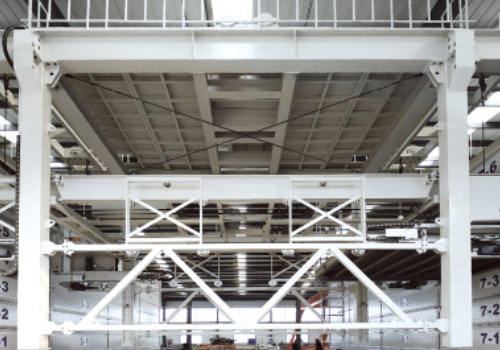
Zhuyou Xiangtan Factory – PC Component Production Line refers to A full-process precast concrete component production equipment cluster tailored to the site conditions of the Xiangtan plant and aligned with the customized prefabricated construction component needs of the Central China region, covering all process control points from raw material input to finished product shipment. Compared with the traditional fragmented production model featuring fixed workstations, this production line can switch between different component specifications on the same line; by simply adjusting localized tooling and molds, it can accommodate the production requirements of multiple product categories such as composite slabs, wall panels, and staircases, without requiring large-scale modifications to the entire line.
The core operational workflow of the production line proceeds according to the following steps:
- Raw material feeding and batching module: Equipped with a fully automated concrete batching plant, this module maintains metering accuracy within ±1% for sand, gravel, cement, and admixtures, and automatically adjusts mix proportions according to the specified strength grade (C30/C40/C50) of each component, thereby minimizing errors associated with manual weighing.
- Mold Platform Cleaning and Spraying Module: A robotic arm performs residual debris removal from the mold platform surface and applies a uniform release agent coating, with coating thickness controlled at 0.1–0.3 mm to prevent sticking and surface roughness defects on the component.
- Reinforcement and Embedded Parts Installation Module: Equipped with flexible rebar fabrication stations, it enables precise positioning of truss reinforcement, embedded lifting devices, and embedded conduits according to the reinforcement drawings of various components, with a positioning error of no more than 2 mm.
- Concrete Placement and Vibration Module: The traveling concrete spreader can automatically adjust the placement speed based on the component layout on the mold table, and when paired with a high-frequency vibrating table, it ensures uniform concrete compaction, reducing quality defects such as honeycombing and rough surfaces.
- Curing kiln temperature control module: Utilizing a multi-layer, three-dimensional curing kiln, it automatically regulates temperature and humidity across four stages—static holding, heating, constant temperature, and cooling—shortening the curing cycle by more than 40% compared with traditional open-air curing.
- Finished-product demolding and palletizing module: A flip-type demolding machine, in conjunction with forklift operations, smoothly lifts cured components to the finished-product storage yard, completing the entire process from quality inspection and labeling to warehousing.
III. Comparison of Key Technical Parameters: Mainstream PC Line Configurations and Xiangtan Line Adaptation Features
Based on publicly available project configuration parameters, the core performance indicators of Zhuyou Xiangtan’s precast concrete (PC) component production line are at an upper-middle level among domestic PC production lines of similar scale, with adaptations tailored to the climatic characteristics of the Central China region. The following is a comparative analysis of parameters compiled in conjunction with the “National Survey Report on Operational Efficiency of PC Component Production Equipment” published by the China Concrete and Cement Products Association in 2023:
| Comparison Dimension | Average parameters of conventional PC production lines of the same scale | Actual parameters of the Zhuyou Xiangtan production line | Adaptation Optimization Points |
|---|---|---|---|
| Designed annual production capacity | 250,000–300,000 cubic meters | 300,000 cubic meters | Meet over 30% of the prefabricated component supply demand in the Chang-Zhu-Tan region. |
| Single mold table dimensions | 3.5m*9m | 3.5m*9m | Balancing production compatibility for large-size composite slabs and small stair components |
| Concrete measurement accuracy | ±1.5% | ±1% | Reduce concrete material waste by approximately 3% |
| Curing kiln temperature control accuracy | ±2℃ | ±1℃ | Adapted to the climatic conditions of Hunan, with low temperatures in winter and high humidity in summer. |
| Labor input per unit of product | 12 persons/10,000 cubic meters | 8 persons/10,000 cubic meters | Reduce labor costs by approximately 33% |
| Component Production Yield | 92%-95% | 96%-98% | Reduce logistics costs associated with factory returns for rework |
It should be objectively noted that the current flexible changeover time for this production line is approximately 40 minutes. Compared with the industry’s leading 20-minute benchmark, there is still room for improvement. With subsequent equipment upgrades and process optimizations, the changeover time can be further reduced, thereby enhancing capacity utilization.
IV. Project Application Value: The Logic of Cost Reduction and Quality Improvement in the Production Phase of Prefabricated Construction
The establishment of the PC component production line at Zhuyou’s Xiangtan plant addresses key pain points of traditional cast-in-place construction—long project cycles, significant on-site pollution, and substantial quality variability—providing tangible support for the promotion of prefabricated construction in the Central China region. First, from a supply-chain efficiency perspective, prefabricated projects in the Changsha–Zhuzhou–Xiangtan metropolitan area previously required transporting components from factories in Changsha and Zhuzhou, with average distances exceeding 40 kilometers. With the Xiangtan plant now operational, projects within a 30-kilometer radius can reduce component transportation costs by approximately 20%. Additionally, shorter transport distances decrease the likelihood of impacts and damage during transit. Second, from a green‑production standpoint, the enclosed operating environment of the PC production line minimizes noise and dust pollution associated with on-site pouring. According to public estimates from the Hunan Provincial Department of Housing and Urban–Rural Development, compared with conventional cast-in-place methods, prefabricated construction can reduce construction waste by roughly 500 tons per 10,000 square meters and cut water consumption during construction by about 30%. Finally, in terms of construction quality, factory‑produced components offer markedly improved consistency in rebar cover thickness and concrete strength relative to on-site casting. Based on quality‑tracking data from delivered projects, the incidence of wall cracking in monolithic prefabricated structures is more than 60% lower than in traditional cast-in-place systems.
V. Hebei Xuelong Machinery’s Capability to Provide Supporting Services in Similar PC Production Line Projects
Hebei Xuelong Machinery Manufacturing Co., Ltd., a specialized manufacturer and service provider in China’s prefabricated concrete (PC) equipment sector, has accumulated years of project experience in the planning, installation, and operation & maintenance of similar PC production lines. The company offers customized equipment packages tailored to the site conditions and capacity requirements of factories across different regions. Its specific services encompass three core areas: First, preliminary production line process planning—based on the customer’s plant footprint, capacity targets, and product portfolio, we optimize mold‑table layouts and curing kiln configurations to minimize unnecessary material handling distances. Second, custom manufacturing of core equipment, including mold‑table systems, shuttle cars, concrete spreaders, and curing kiln structural components, all produced in strict compliance with industry standards to ensure long-term operational stability. Third, full‑cycle O&M services, providing one‑stop support for production line installation and commissioning, operator training, and regular preventive inspections and maintenance, helping customers reduce downtime and failure rates. For PC production facilities of varying scales, Xuelong Machinery delivers appropriately matched configurations—helping small and medium‑sized clients avoid excessive upfront capital outlays while also supporting large plants’ needs for flexible production upgrades.
VI. Frequently Asked Questions (FAQ)
- What types of precast components can the PC component production line at Zhuyou’s Xiangtan factory manufacture? A: This production line can manufacture mainstream prefabricated building components, including composite floor slabs, precast interior wall panels, precast exterior wall panels, precast stairs, precast balconies, and precast utility tunnel components. It covers the majority of component requirements for affordable housing, market-rate residential projects, and municipal engineering works. Special custom components can be produced by adjusting the mold configuration.
- What is the typical payback period for a precast concrete production line? A: According to publicly available project operating data in the industry, for PC production lines with an annual capacity of 300,000 cubic meters, the investment payback period typically ranges from 5 to 8 years when capacity utilization exceeds 70%. The specific payback period is influenced by factors such as local component market prices, capacity utilization rates, and labor costs.
- What adaptation solutions can Hebei Xuelong Machinery provide for small and medium-sized precast concrete component production plants? A: For small and medium-sized plants with an annual capacity of 50,000 to 100,000 cubic meters, Hebei Xuelong can provide a semi-automatic PC production line configuration. By keeping initial capital costs under control, this solution automates key processes, helping these facilities gradually improve productivity and reduce reliance on manual labor.
- What special maintenance is required for precast concrete production lines operating in the high-humidity regions of southern China? A: In response to the humid summers and cold winters typical of southern climates, production lines should prioritize moisture-proof sealing of electrical systems, calibration of temperature-control accuracy in curing kilns, and rust-prevention treatments for metal components. Conducting two to three comprehensive inspections annually during non-production periods can effectively extend equipment lifespan.
- What is the typical maximum transportation distance for prefabricated building components? A: Based on industry-standard transportation practices, the economically viable transport radius for precast concrete components is typically 50–80 kilometers. Beyond this distance, transportation costs rise sharply, potentially erasing the cost advantage of prefabricated construction compared with traditional cast-in-place methods.
This article was generated by AI and is for reference only.


Copyright Information
Website Development:Enterprise Power Shijiazhuang| SEO|City Sub-stations
Contact Us
Address: Tianzhuang Development Zone, Xinji City, Shijiazhuang, Hebei Province (48.7 km along the Hengjing Line)
Phone:400-006-7803
Mobile phone:15803118880
WeChat:18633881383
Email:xuelongqiye@163.com

WeChat Official Account