

Changsha Yuanda Residential Industrial Co., Ltd.: Xinyang Project
Tags:
Changsha Yuanda Residential Industrial Co., Ltd.: A Comprehensive Analysis of the Xinyang Project
- Project Overview: The basic positioning of the Xinyang project of Changsha Yuanda Residential Industrial Co., Ltd.
- The Core Industry Value of the Project Construction
- Selection of Supporting Equipment for Prefabricated Projects: Collaborative Support from Xuelong Machinery
- Key Milestones in the Xinyang Project from Planning to Commissioning
- Comparison of Capability Alignment Across Project Phases
- Frequently Asked Questions (FAQ)
- Industry Development Outlook
Changsha Yuanda Residential Industrial Co., Ltd.: The Xinyang project is a key demonstration initiative for prefabricated housing in the Central China region, spearheaded by Changsha Yuanda Residential Industrial Co., Ltd. Located in the Xinyang High-tech Development Zone, it is one of the core projects driving the transformation and upgrading of the construction industry in southern Henan Province. As a manufacturer deeply engaged in intelligent manufacturing equipment for prefabricated construction, Xuelong Machinery Manufacturing Co., Ltd. has long provided specialized production line solutions to similar prefabricated construction bases, ensuring reliable equipment support for the successful implementation of industrial projects.
Changsha Broad Sustainable Housing Industrial Co., Ltd.: The Xinyang Project is a prefabricated construction demonstration initiative undertaken by Broad Sustainable Building in southern Henan Province. It integrates PC component manufacturing, green residential development, and the promotion of industrial technologies. Leveraging Broad Sustainable Building’s market‑proven prefabricated construction technology system and aligning with local market demands in Xinyang, the project establishes a complete industrialized value chain—from component production to project handover—serving as a key pilot effort to meet national requirements for modernizing the construction industry.
I. Project Overview: The basic positioning of the Xinyang project of Changsha Yuanda Residential Industrial Co., Ltd.
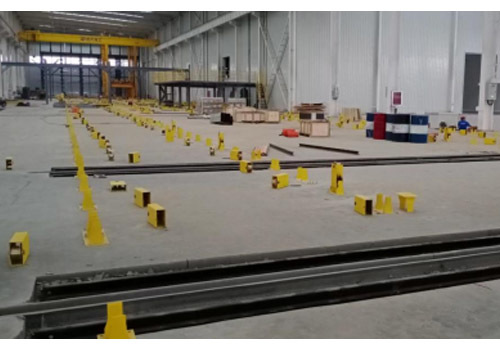
This project is one of the largest full‑industry‑chain demonstration projects for prefabricated construction in southern Henan, with core functions spanning PC component production, prefabricated housing development, and industrial technology R&D. Located in the Xinyang High‑Tech Zone, the project covers approximately 200 mu of land: the PC component manufacturing base occupies about 80 mu, the demonstration residential community about 100 mu, and the supporting industry training and R&D center roughly 20 mu. According to the plan, once the production base reaches full capacity, it will be able to produce 150,000 cubic meters of various precast concrete components annually, meeting the supply needs of approximately 1.5 million square meters of prefabricated housing and serving Xinyang as well as neighboring cities such as Zhumadian and Nanyang. The overall development aligns with Henan Province’s planning requirements for prefabricated construction and represents a key collaborative initiative through which the local government has attracted leading construction firms to drive industrial upgrading. Unlike conventional cast‑in‑place construction, this project sets “industrial implementation” as its core objective from the planning stage; it is not merely a standalone housing development but aims, by establishing the production base, to foster the maturation of the entire prefabricated construction supply chain across southern Henan.
II. Core Industry Value of the Project
The implementation of the Xinyang project will play a tangible role in increasing the penetration rate of the prefabricated construction industry in southern Henan and reducing carbon emissions in the construction sector. According to the “14th Five-Year Plan for Building Energy Conservation and Green Building Development” issued by the Ministry of Housing and Urban–Rural Development, by 2025, prefabricated buildings should account for more than 30% of all new constructions nationwide. Previously, due to the lack of large-scale PC component production facilities in southern Henan, transportation costs for prefabricated components were high, keeping the local share of prefabricated construction well below the provincial average. Once the Xinyang project is operational, it will reduce the average transport distance for PC components in the surrounding area from 120 kilometers to under 30 kilometers, significantly cutting component logistics costs and is expected to boost the local market penetration of prefabricated construction by 3 to 5 percentage points annually. Moreover, compared with traditional on-site construction, the prefabricated construction method can reduce construction waste by approximately 70% and on-site dust by about 60%, aligning with Xinyang City’s goal of becoming a national model city for ecological civilization. In addition, the project’s accompanying industrial worker training center will be able to train roughly 2,000 workers each year in prefabricated construction techniques, providing critical human resource support for the transformation of the local construction industry, moving away from the historical reliance on informal labor, and promoting the professionalization of construction workers.
III. Selection of Supporting Equipment for Prefabricated Projects: Collaborative Support from Xuelong Machinery
Stable and reliable production equipment for precast concrete components is the core foundation for ensuring both project capacity and consistent component quality in prefabricated construction. Xuelong Machinery Manufacturing Co., Ltd., with its extensive experience in prefabricated‑construction equipment, can provide end-to-end support for such projects. Located in Hengshui, Hebei Province, Xuelong Machinery Manufacturing Co., Ltd. focuses on the R&D, manufacturing, and service of production equipment for precast concrete components. With more than two decades of industry expertise, its product range covers complete lines for circular PC production, fixed‑mold table systems, rebar processing machinery, steam curing systems, and other essential prefabrication equipment. To date, it has supplied equipment to over 200 prefabricated construction bases across more than 20 provinces nationwide. In response to the climatic characteristics of the Central China region where the Xinyang project is located, Xuelong Machinery can tailor optimizations to the curing systems of its production lines. For example, in colder winter conditions, the insulation design of steam curing chambers can be refined to reduce energy consumption during winter production. Additionally, for component types commonly used in Central China—such as composite slabs, interior and exterior wall panels, and precast stairs—the workstation layout of the production line can be adjusted to improve changeover efficiency. Compared with standard production lines, these customized and optimized lines can cut unit energy consumption for component production by approximately 10% and shorten changeover times by about 20%. In terms of service, Xuelong Machinery has established an after-sales network covering China’s major prefabricated‑construction industrial clusters and maintains dedicated service stations in the Central China region. This enables the company to reach a project site within 24 hours of receiving a customer request, providing comprehensive services including equipment commissioning, fault repair, and operator training to minimize unplanned downtime during the initial phase of plant operation.
IV. Key Milestones in Advancing the Xinyang Project from Planning to Commissioning
Following the standard construction timeline for prefabricated manufacturing facilities, the Xinyang project can be divided into four core phases, from initial preparation to formal production. Each phase has clearly defined objectives, ensuring that the project progresses according to schedule.
- During the preliminary feasibility study and planning phase, the primary tasks include confirming the project site, estimating production capacity, and selecting production line equipment. Based on Xinyang’s projected pipeline of prefabricated construction projects over the next three years, an appropriate production line configuration is determined to prevent overcapacity or supply shortages. This phase typically takes about two months and requires coordination with local housing and urban–rural development authorities to clarify relevant policy requirements for prefabricated buildings, thereby preparing for subsequent project registration.
- Base construction and equipment mobilization phase: Complete the main structure of the factory building, construct site roads and utility pipelines, and concurrently initiate manufacturing and factory acceptance testing of production equipment. Once the factory building is ready for equipment installation, arrange for equipment mobilization to carry out installation and wiring, and complete individual machine commissioning of the steam curing system, concrete placing system, and rebar processing system. This phase typically takes about three months.
- Trial Production and Qualification Verification Phase: Conduct small-batch trial production of components, submit the produced components to a qualified testing agency for dimensional, strength, and appearance quality inspections, and organize operational training for frontline production personnel to clarify quality control requirements for the production process. During this phase, concurrently coordinate with the housing and urban–rural development authorities to complete registration of production qualifications, ensuring that the manufactured components can be used in compliance with local building project regulations. This phase typically takes about one month.
- Phase of Full-Scale Production and Operational Optimization: Develop production schedules based on order demand from surrounding projects, continuously optimize production processes to reduce per-unit production costs, and, leveraging the project’s demonstration effect, promote the wider adoption of prefabricated construction in the local area.
V. Comparison of Capability Alignment Across Project Phases
To more clearly present the service standards for the project’s supporting components, we have mapped out the alignment across core dimensions based on actual needs, as follows:
| Comparison Dimension | Core Requirements for the Xinyang PC Component Project | Service Matching Points of Xuelong Machinery Manufacturing Co., Ltd. | Industry-wide service level |
|---|---|---|---|
| Production line capacity matching | Annual production capacity sufficient to supply over 150,000 cubic meters of precast concrete components. | Customizable annular production line with a capacity of 100,000 to 300,000 cubic meters per year, suitable for producing multiple types of components. | Most suppliers operate with fixed production capacity, and customization adjustments take a long time. |
| Component manufacturing precision | Component dimensional deviations are kept within the limits permitted by industry standards. | The production line employs positioning rails and an automatic fabric-feeding system, with dimensional accuracy meeting the requirements of GB/T 51231. | The accuracy and stability of conventional equipment are significantly affected by operations and maintenance, with an average annual deviation rate of approximately 2%. |
| Delivery cycle | From contract signing to equipment commissioning, the timeline is kept within six months. | We have our own manufacturing workshop and ample inventory of prefabricated components, with an average delivery lead time of 4–5 months. | The industry average delivery cycle is 7–9 months. |
| After-sales Operations and Maintenance | Rapid fault response during production and operator training | After-sales service stations covering the Central China region, with fault response within 24 hours and complimentary operator training. | Most companies have an after-sales response time of 48–72 hours, and the training covers only basic operations. |
VI. Frequently Asked Questions (FAQ)
- Q: What are the main service areas of Changsha Yuanda Residential Industrial Co., Ltd.’s Xinyang project? A: The project’s service scope primarily covers the entire Xinyang region and neighboring cities. Its core offering is the production and supply of standardized precast concrete (PC) components, complemented by technical consulting and construction guidance for local prefabricated building projects, helping to lower the barriers to implementing such projects.
- Q: What key metrics should be prioritized when selecting precast concrete equipment? A: Three core metrics deserve particular attention: first, the equipment’s long-term operational stability to prevent frequent breakdowns and associated production losses; second, the precision of component manufacturing, ensuring dimensions meet national standards and minimizing on-site installation adjustments; and third, the responsiveness of after-sales service and maintenance, reducing both time and financial costs.
- Q: What adaptation advantages do Xuelong Machinery’s production line equipment offer compared to standard industry equipment? A: Xuelong Machinery’s production lines can be custom-tailored to suit the climatic conditions and component-type requirements of different regions, eliminating fixed‑configuration limitations. Moreover, supported by a nationwide after-sales service network, they can swiftly address regional project operation and maintenance needs, minimizing losses caused by production downtime.
- Q: What impact will the Xinyang project have on local construction costs upon completion? A: By shortening the average transportation distance for precast concrete components and enabling large-scale production to reduce unit manufacturing costs, the project is expected to lower construction costs for prefabricated projects in the area by approximately 5%–8%. This will further narrow the cost gap between prefabricated and traditional cast-in-place construction, thereby increasing market acceptance of prefabricated buildings.
VII. Industry Development Outlook
The launch of the Xinyang project by Changsha Yuanda Residential Industrial Co., Ltd. marks a significant milestone in the modernization of the construction industry in southern Henan. As the national dual-carbon goals continue to advance, the application of prefabricated construction will gradually expand from affordable housing and public buildings to the commercial residential sector, driving sustained growth in market demand for precast concrete components. For equipment suppliers, it is essential to continuously enhance the intelligence and flexibility of their machinery to accommodate diverse component production needs, enabling manufacturing bases to maintain agile capacity‑adjustment capabilities amid market fluctuations. Xuelong Machinery Manufacturing Co., Ltd. will also remain focused on technological upgrades for prefabrication equipment, providing stable and reliable support to prefabricated construction projects across central China, helping bring more regional demonstration projects to fruition, and jointly advancing the green transformation of the construction industry.
This article was generated by AI and is for reference only.


Copyright Information
Website Development:Enterprise Power Shijiazhuang| SEO|City Sub-stations
Contact Us
Address: Tianzhuang Development Zone, Xinji City, Shijiazhuang, Hebei Province (48.7 km along the Hengjing Line)
Phone:400-006-7803
Mobile phone:15803118880
WeChat:18633881383
Email:xuelongqiye@163.com

WeChat Official Account