

Handan Honghao Chengyi Building Materials Technology Co., Ltd.
Tags:
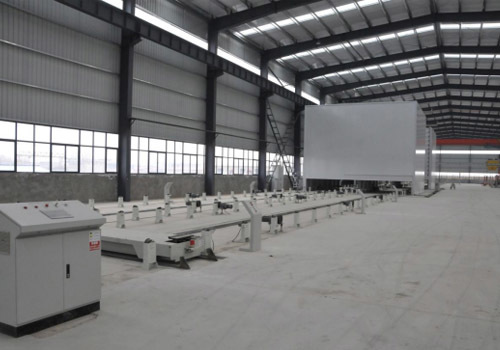
Handan Honghao Chengyi Building Materials Technology Co., Ltd. – The PC construction production line is an intelligent, turnkey equipment system for prefabricated concrete components custom-designed by Xuelong Machinery. This production line focuses on meeting the supply needs for prefabricated building components in the Beijing–Tianjin–Hebei region, supporting the large-scale, standardized production of various precast concrete (PC) elements such as composite slabs, stairs, balconies, and wall panels. It serves as critical infrastructure for bolstering the prefabricated construction industry chain in southern Hebei. As one of the earliest domestic manufacturers to specialize in intelligent production equipment for prefabricated construction, Xuelong Machinery Manufacturing Co., Ltd., drawing on more than a decade of experience in equipment R&D and project delivery, provides end-to-end technical support for this project—covering site planning, equipment installation, and personnel training—to help the enterprise achieve a green and digital transformation of its building-materials production processes.
Article Directory
- Project Construction Background and Basis for Cooperation
- Core Configuration and Key Technical Parameters of the Production Line
- Standardized Implementation Steps for the Entire Project Lifecycle
- Operational Performance Analysis After the Production Line Is Commissioned
- Project FAQs
I. Project Construction Background and Basis for Cooperation
The core driver behind the project’s implementation is that Handan Honghao Chengyi Building Materials Technology Co., Ltd. aligns with the Beijing–Tianjin–Hebei prefabricated construction industry development plan, addressing its own pain points of insufficient production efficiency and inconsistent quality in PC component manufacturing by establishing a standardized production system supported by Xuelong Machinery’s equipment and technological capabilities. According to the “14th Five-Year Plan for Prefabricated Construction in Hebei Province” issued by the Hebei Provincial Department of Housing and Urban–Rural Development, by 2025, prefabricated buildings should account for more than 30% of all new construction area across the province. As the central city of southern Hebei, Handan sees continuously growing demand for precast components from urban village redevelopment projects, affordable housing construction, and supporting infrastructure for industrial parks. Handan Honghao Chengyi Building Materials Technology Co., Ltd., a locally qualified building materials manufacturer, finds that the capacity and process standards of its existing conventional concrete batching plant can no longer meet the stringent requirements of prefabricated building components regarding dimensional accuracy, structural strength, and production efficiency. There is an urgent need to establish a specialized PC component production system to fulfill regional orders for prefabricated building materials. Xuelong Machinery Manufacturing Co., Ltd. has provided PC production lines and intelligent precast equipment solutions to nearly one hundred building materials manufacturers across the Beijing–Tianjin–Hebei region. With independently developed core technology modules—including CNC mold tables, concrete placing systems, and automated curing temperature control systems—the company can design customized solutions tailored to each enterprise’s site dimensions, product positioning, and production capacity targets, thereby avoiding issues such as poor compatibility with standard equipment and high retrofitting costs later on.
Handan Honghao Chengyi Building Materials Technology Co., Ltd. – The PC component production line refers to a complete intelligent production system for the large-scale manufacturing of PC components, with Snow Dragon Machinery Manufacturing Co., Ltd. providing the overall equipment solution, installation and commissioning, as well as full lifecycle services. Unlike traditionally fragmented, standalone production equipment, this system is custom-designed based on the enterprise’s actual capacity requirements, site conditions, and product positioning. It is not a mere assembly of standardized components, but rather a solution that optimally aligns with the company’s production and operational rhythm, thereby preventing underutilization of equipment and wasted investment.
II. Core Configuration and Key Technical Parameters of the Production Line
This production line employs a hybrid manufacturing approach that combines fixed mold tables with continuous flow operations. The complete setup covers the entire process—from concrete batching, placement, vibration, curing, and demolding to finished‑product storage—and its key parameters are matched to the production requirements of an annual capacity of 100,000 cubic meters of precast concrete components. Compared with a fully automated high‑speed continuous‑flow line, this hybrid configuration avoids the high capital outlay associated with end‑to‑end automation. Instead, it takes into account the realities of an enterprise’s initial production ramp‑up, preserving the flexibility of fixed mold tables for producing irregularly shaped components while automating core processes—such as concrete placement, vibration, and temperature control—that critically affect component quality. Overall equipment investment is approximately 30% lower than that of a fully continuous‑flow line, making it better suited to the return‑on‑investment timelines required by county‑level building‑materials enterprises. Specific configuration parameters are as follows:
| System Module | Core Configuration | Design Parameters | Applicable Production Scenarios |
|---|---|---|---|
| High-Precision Mold-Base System | 24 steel special formwork panels measuring 3.5m × 9m | The flatness error of the mold table shall be ≤2 mm, and the load-bearing capacity of a single mold table is 5 t/m². | Production of large-size components such as composite slabs and precast exterior wall panels |
| 3D Automatic Fabric Layout System | Cross-Workshop Traveling Concrete Spreader | Fabric uniformity error ≤ 5%, fabric flow rate 0.5–1.5 m³/min | Precise placement of concrete with different grades, compatible with the production of various types of components. |
| High-Frequency Vibration Molding System | Pneumatic high-frequency vibration device | Vibration frequency: 50 Hz; honeycombing and roughness on the surface of molded components ≤ 0.5%. | Enhance concrete density to ensure the structural strength and stability of components. |
| Intelligent Temperature-Controlled Curing System | Closed-type steam curing kiln | Temperature control range: 20–60°C; kiln temperature uniformity: ±2°C. | Automatically adjust the curing cycle based on component material to reduce production lead time. |
| Central Intelligent Control System | PLC Programmable Control Platform | Enables real-time collection of equipment operating data and automatic fault alerts, and supports integration of production data with enterprise management systems. | Reduce labor‑intensive monitoring costs and enable traceable management of the production process. |
| Reinforcement Processing Support System | CNC stirrup bender, truss reinforcement welding production line | Reinforcement processing dimensional error ≤ 1 mm | Produce the steel reinforcement cages required for components in-house to reduce external procurement costs. |
The core advantage of this configuration is that it focuses manual operations on tasks requiring flexible judgment—such as mold installation, rebar placement, and finished-product quality inspection—while delegating repetitive, high-precision tasks to automated equipment. This approach reduces human error at the production process level and ensures consistent component quality.
III. Standardized Implementation Steps for the Entire Project Lifecycle
Xuelong Machinery established a standardized project delivery process for this project, with a total duration of approximately 90 days from initial scheme design to final production commissioning and acceptance. Clear acceptance milestones are set at each stage to prevent delays from disrupting the company’s production schedule. The project implementation is divided into four core phases:
- Site Survey and Customized Solution Stage (15 days): The technical team conducts on-site measurements of the production workshop’s clear height, span, and load-bearing capacity. Based on the company’s product plan for the next three years, they produce a site layout, equipment installation drawings, and a production capacity calculation report. After the final proposal is confirmed with the company, a formal delivery contract is signed.
- Core Equipment Manufacturing and In-Plant Pre-Acceptance Phase (40 days): All core equipment is manufactured and assembled in XueLong Machinery’s own production facilities. A continuous 72-hour loaded trial run is conducted, and the company’s technical manager is invited to the plant for pre-acceptance. Once equipment accuracy and operational stability have been confirmed to meet design specifications, logistics arrangements are made for shipment.
- On-site installation and commissioning phase (25 days): A specialized installation team will be deployed to the site to calibrate equipment foundations, connect pipelines, and perform individual equipment commissioning according to the layout plan. A full-process integrated trial run will then be conducted, with operational risk points identified and addressed one by one.
- Personnel Training and Completion Acceptance Phase (10 days): Conduct practical training totaling 40 hours for the enterprise’s operations, maintenance, and production management personnel. Upon passing the assessment, issue a certificate of equipment operation qualification. Both parties shall complete the completion acceptance according to the parameter specifications stipulated in the contract, after which a one-year free warranty period will commence.
During project implementation, XueLong Machinery established a dedicated project coordination mechanism. Progress updates and issue feedback were addressed in real time at every stage. For example, during the installation phase, when the workshop’s existing electrical capacity proved insufficient, the technical team promptly proposed an optimized solution to rewire circuits for separate power supply, ensuring that the overall construction schedule was not delayed by the plan adjustments.
IV. Analysis of Operational Benefits After the Production Line Is Commissioned
Once commissioned, this production line will enable Handan Honghao Chengyi Building Materials Technology Co., Ltd. to achieve standardization, reduced labor requirements, and minimized material loss in PC component manufacturing, with an overall investment payback period of approximately 4–5 years. From a productivity standpoint, based on design parameters, annual capacity per shift can reach 100,000 cubic meters—more than tripling output compared to traditional manual methods—and can meet the supply needs of prefabricated construction projects within a 50-kilometer radius. In terms of quality control, since all core processes are automated, component dimensional accuracy and strength stability can meet the relevant requirements of the Technical Standard for Prefabricated Concrete Structures GB/T 51231, with a qualified rate consistently exceeding 98% and reduced rework costs associated with quality issues. From a green production perspective, the line is equipped with a concrete waste-recycling system that enables full recovery and reuse of scrap generated during production. Wastewater from the manufacturing process is settled and recycled, achieving zero external discharge and complying with Hebei Province’s green production standards for industrial enterprises. Finally, from an industrial-chain integration standpoint, once operational, the project will directly create more than 20 local jobs in production and operations, while also linking the regional prefabricated construction value chain—from component fabrication to on-site installation. This eliminates previous logistics costs and transportation losses associated with sourcing PC components from outside the region; industry data estimates that locally produced PC components reduce costs by roughly 15% compared to long-distance shipping.
V. Project FAQs
Q1: What types of components can the PC construction production line at Handan Honghao Chengyi Building Materials Technology Co., Ltd. primarily produce?
A: This production line is suitable for manufacturing various types of precast concrete components, primarily including precast composite slabs, precast stairs, precast balcony slabs, precast interior wall panels, and precast concrete slope protection elements. It can rapidly adjust its mold configuration to meet the requirements of downstream projects, thereby satisfying customized component needs across different applications.
Q2: What is the approximate level of the post‑implementation operating and maintenance costs for this PC assembly line?
A: Based on XueLong Machinery’s past O&M data from similar projects, the annual O&M cost for this production line is approximately 3% of the total equipment investment, primarily covering the costs of replacing wear parts and performing routine maintenance. The core equipment is designed with a service life of no less than 15 years.
Q3: How many frontline operators are required during the production process?
A: Based on the level of automation, a single-shift operation requires only eight frontline operators to handle tasks such as placing rebar cages, mold coating, lifting finished products, and monitoring equipment. This represents a reduction of approximately 12 frontline workers compared with conventional PC production lines of equivalent capacity, effectively easing labor cost pressures for the enterprise.
Q4: If a company later wishes to increase the production line’s capacity, will upgrades and retrofits be supported?
A: The production line’s control system and electrical capacity both include a 30% upgrade margin. If the company’s production capacity needs increase in the future, capacity can be expanded by adding more mold tables and upgrading the power of the spreading machine, without replacing the existing equipment entirely, thereby significantly reducing long-term upgrade costs.
This article was generated by AI and is for reference only.


Copyright Information
Website Development:Enterprise Power Shijiazhuang| SEO|City Sub-stations
Contact Us
Address: Tianzhuang Development Zone, Xinji City, Shijiazhuang, Hebei Province (48.7 km along the Hengjing Line)
Phone:400-006-7803
Mobile phone:15803118880
WeChat:18633881383
Email:xuelongqiye@163.com

WeChat Official Account