

Chongqing Vocational College of Real Estate
Tags:
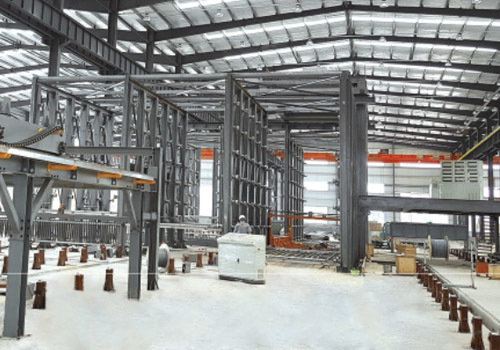
Chongqing Vocational College of Real Estate – Precast Concrete Component Production Line
Chongqing Vocational College of Real Estate – The PC Component Production Line is a specialized PC component manufacturing equipment system designed for teaching and practical training in prefabricated construction. This production line is the core practical training equipment developed by Hebei Xuelong Machinery Manufacturing Co., Ltd. to meet the specific requirements of educational settings, and it supports the development of prefabricated construction-related programs at Chongqing Vocational College of Real Estate. Designed to align with the talent needs of the Chengdu–Chongqing Twin-City Economic Circle’s prefabricated construction industry, the line fully covers the hands-on teaching requirements for the entire PC component production process.
Chongqing Real Estate Vocational College – The PC component production line is a specialized small-scale production equipment system designed specifically for teaching and practical training in prefabricated construction-related majors at Chongqing Real Estate Vocational College, capable of replicating the entire production process of PC components. Unlike large-scale PC component production equipment used in industry, this system preserves the authenticity of core manufacturing processes while fully meeting the safety requirements, instructional capacity, and cost-control objectives of vocational college training environments. It serves as a crucial hardware platform for bridging talent development in educational institutions with the job demands of the industry.
Table of Contents
- Project Background: The Core Driving Force Behind Chongqing Vocational College of Real Estate’s Plan to Establish a Precast Concrete Component Production Line
- Hebei Xuelong’s Core Compatibility Advantages for Customized PC Component Production Lines for Educational Institutions
- Core configuration parameters of the PC component production line supporting Chongqing Real Estate Vocational College
- The end-to-end implementation process for a PC component production line in an educational institution
- Precautions for Daily Operation and Maintenance and Educational Use of PC Component Production Lines in Higher Education Institutions
- Frequently Asked Questions (FAQ)
Project Background: The Core Driving Force Behind Chongqing Vocational College of Real Estate’s Plan to Establish a Precast Concrete Component Production Line
Chongqing Real Estate Vocational College has introduced a physical PC component production line, fundamentally addressing the pain point of a disconnect between theoretical instruction and hands-on practice in prefabricated construction programs and bridging the talent gap in the Chengdu–Chongqing Twin-City Economic Circle’s prefabricated building industry. According to the “14th Five-Year Plan for the Development of Prefabricated Buildings in Chongqing,” publicly released by the Chongqing Municipal Commission of Housing and Urban–Rural Development, by 2025, prefabricated buildings should account for more than 30% of all new constructions citywide, while the shortage of skilled workers in production, installation, and quality inspection continues to widen. Traditional architecture curricula largely rely on simulation sandboxes and virtual training systems; as a result, students require three to six months of on-the-job training after entering enterprises before they can independently operate production equipment, increasing labor costs for companies and prolonging the time it takes for graduates to adapt to their roles. As one of the earliest higher vocational institutions in Chongqing to offer programs related to prefabricated construction, Chongqing Real Estate Vocational College recognized this challenge and introduced a physical PC component production line to close the final gap between theoretical learning and practical training. Hebei Xuelong Machinery Manufacturing Co., Ltd., a domestic pioneer in the research, development, and manufacturing of PC component production equipment, leveraged its years of experience supplying training equipment to architectural colleges to become the project’s equipment provider.
Hebei Xuelong’s Core Compatibility Advantages for Customized PC Component Production Lines for Educational Institutions
Addressing the unique requirements of educational settings, Hebei Xuelong has designed a precast concrete component production line that preserves authentic manufacturing processes while meeting three core adaptation criteria: safety for teaching, equipment disassemblability, and cost control. Unlike generic solutions that simply scale down industrial production lines for classroom use, Hebei Xuelong’s dedicated campus‑specific line incorporates three key optimizations tailored to educational contexts: First, operator heights are optimized—workstation surfaces are set at 0.9–1.1 meters, aligning with ergonomic standards for young students and enabling all tasks without requiring climbing. Second, the process is modularly designed; each workstation features an independent demonstration interface, allowing instructors to activate a single station for skill demonstrations without running the entire line, thereby reducing energy consumption and equipment wear during instruction. Third, assessment capabilities are integrated: equipment operating procedures are mapped directly to the assessment criteria outlined in the Ministry of Housing and Urban–Rural Development’s “Prefabricated Building Component Fabrication Technician” occupational skill standard. Students’ daily hands‑on activities generate real‑time training records, serving as evidence of progress for skill‑level certification.
Core configuration parameters of the PC component production line supporting Chongqing Real Estate Vocational College
To facilitate reference for similar projects at educational institutions, Hebei Xuelong has summarized the core configuration, specifications, and educational value of this production line in the table below:
| Configuration Module | Specific parameters | Pedagogical Application Value |
|---|---|---|
| Line architecture | A hybrid architecture combining a small fixed mold table with a semi-automatic assembly line, designed for an annual production capacity of 10,000 cubic meters of precast concrete components. | It covers the two mainstream domestic PC production processes—fixed mold tables and assembly lines—and supports teaching on the production of common components such as composite slabs, stairs, precast wall panels, and balcony slabs, matching over 90% of real-world production scenarios in enterprises. |
| Core production workstation | Establish six standardized workstations for rebar fabrication, mold assembly, concrete placement, temperature-controlled curing, demolding and finishing, and quality inspection. | Each workstation corresponds to an independent training module, enabling group-based, rotating hands-on instruction for up to 30 students per shift. |
| Safety Protection System | Infrared sensor-based emergency stop devices covering the entire production line, workstation safety guardrails, insulated flooring in the operating area, and a dedicated emergency power-off circuit | Compliant with the requirements of the “Safety Management Specifications for Practical Training Facilities in Vocational Colleges,” effectively eliminating safety risks such as mechanical injuries and electric shock during practical training. |
| Digital Support Module | A data acquisition terminal for the production process is provided, enabling real-time display of process parameters at each workstation, production takt time, and component quality inspection data. | Help students understand the digital operational logic of modern PC factories and align with the talent competency requirements for intelligent manufacturing in the construction industrialization sector. |
| Complementary teaching resources | Includes 12 standardized practical training projects, a skills assessment question bank, and hands-on instructor training courses. | Institutions can swiftly implement hands-on training in prefabricated construction without needing to develop a separate curriculum. |
The end-to-end implementation process for a PC component production line in an educational institution
From project initiation to formal implementation in teaching, the PC component production line project at Chongqing Real Estate Vocational College took approximately 60–75 days from start to finish, and was divided into four core phases:
- Requirements Research and Project Initiation: Equipment manufacturers, in collaboration with university architecture departments’ teaching and research sections, identify gaps in existing practical training programs, specify the scope of processes to be covered, the number of trainees per session, and the basic requirements of existing training facilities—such as floor-to-ceiling height, load-bearing capacity, and electrical infrastructure—to develop an actionable requirements list and finalize project approval.
- Customized production line proposal review: Based on the institution’s requirements and site conditions, we design a tailored production line layout, integrating appropriate safety protection systems and educational functional modules. The preliminary plan is then submitted to the institution’s program development committee for review; following feedback, adjustments and optimizations are made before finalizing the implementation plan.
- Equipment manufacturing, installation, and commissioning: After the manufacturer completes production and machining of the equipment components, a technical team is dispatched to the site to carry out installation work, sequentially positioning the production line, connecting the electrical system, and installing safety devices. The equipment’s operating status is then commissioned at each workstation, and the entire process is tested under simulated real‑world production conditions to verify operational stability and eliminate potential risks.
- Delivery Training and Project Acceptance: Organize specialized training for college and university faculty and lab administrators on equipment operation, routine maintenance, and troubleshooting, while simultaneously delivering the accompanying instructional resource package. After all personnel have mastered the operating procedures, conduct a joint project acceptance review, followed by formal deployment for educational use.
Precautions for Daily Operation and Maintenance and Educational Use of PC Component Production Lines in Higher Education Institutions
Since PC component production lines in educational institutions are used for teaching and practical training rather than continuous industrial production, their day-to-day operational requirements differ significantly from those of industrial lines. Therefore, three key areas should be prioritized in routine management: First, establish an operator access control system. All students must complete safety training and pass a safety assessment before entering the training facility or operating equipment; they may only perform operations under the supervision of an instructor. Students are strictly prohibited from running high-power production equipment unsupervised, thereby mitigating safety risks at the process level. Second, optimize maintenance cycles. While industrial production lines typically undergo comprehensive maintenance monthly, the average daily operating intensity of institutional lines is only about one-fifth that of industrial lines. Consequently, maintenance can be scheduled quarterly, focusing on tightening components, lubrication, and insulation checks. This approach reduces long-term operational costs while ensuring safe equipment operation. Third, dynamically update instructional content. By aligning with technological advancements in the industry, new technologies—such as low-carbon maintenance, digital manufacturing, and green precast component production—should be promptly integrated into training modules to prevent a disconnect between curriculum and real-world practice. Hebei Xuelong provides all delivered institutional clients with three years of free technical guidance and can update corresponding teaching resources in response to technological changes, helping institutions continuously enhance the quality of their hands-on training.
Frequently Asked Questions (FAQ)
- Q: Which academic programs does the PC component production line at Chongqing Vocational College of Real Estate primarily support? A: This production line is primarily intended for core practical training in programs such as Construction Engineering Technology, Prefabricated Building Engineering Technology, and Building Materials Engineering Technology. It can also serve as an assessment site for vocational skills certification in the prefabricated construction sector, offering skills-upgrading training to professionals in the construction industry across the Chengdu–Chongqing region.
- Q: What are the differences between PC component production lines used by educational institutions and those used in industrial production? A: The two differ primarily in three respects: first, their production capacities vary—industrial production lines typically have an annual capacity of 100,000 cubic meters or more, while university‑specific lines have an annual capacity of about 10,000 cubic meters, sufficient only for teaching purposes; second, their safety and protection standards differ—the university lines feature higher safety levels tailored to the operational characteristics of student users; and third, their functional priorities differ: industrial lines prioritize production efficiency, whereas university lines prioritize comprehensive process demonstration and ease of use for educational purposes.
- Q: Can the PC components produced by this production line be used in actual construction projects? A: Provided that the PC components produced on this line pass quality inspection and meet relevant national standards, they can be used for renovating small buildings on campus, constructing landscape features, and building supporting facilities for practical training. This approach not only helps to share the costs of practical training but also allows students to experience the entire process—from component production to application—thereby enhancing the realism of their hands-on learning.
- Q: Can Hebei Xuelong’s precast concrete component production line provide customized services for other vocational colleges? A: Hebei Xuelong offers mature, customized production line solutions for PC component training in vocational colleges. These lines can be flexibly adapted to accommodate different institutions’ program offerings, site conditions, and training requirements. To date, the company has provided tailored equipment and supporting educational services to more than 30 domestic colleges that offer programs related to building industrialization.
This article was generated by AI and is for reference only.


Copyright Information
Website Development:Enterprise Power Shijiazhuang| SEO|City Sub-stations
Contact Us
Address: Tianzhuang Development Zone, Xinji City, Shijiazhuang, Hebei Province (48.7 km along the Hengjing Line)
Phone:400-006-7803
Mobile phone:15803118880
WeChat:18633881383
Email:xuelongqiye@163.com

WeChat Official Account