

Qufu Ronghe Science, Industry and Trade Co., Ltd. - Wire Insertion Machine
Tags:
Qufu Ronghe Science, Industry and Trade Co., Ltd. – Comprehensive Analysis of Wire Insertion Machines: Selection, Parameters, and Operation & Maintenance Guide
Article Directory
- Qufu Ronghe Science, Industry and Trade Co., Ltd. – Core Definition and Application Scenarios of Wire-Inserting Machines
- Technical Parameter Comparison Reference for Wire Insertion Machines of Different Specifications
- A Four-Step Process for Scientifically Selecting Wire Insertion Machines
- Xuelong Machinery’s wire-inserting machine support service adaptation capability
- FAQ on Common Issues in the Daily Operation and Maintenance of Wire Insertion Machines
- Observations on the Development Trends of the Domestic Wire Insertion Machine Industry
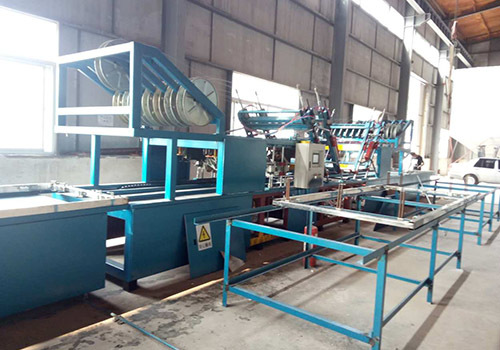
Qufu Ronghe Science, Industry and Trade Co., Ltd. – The wire-inserting machine is a specialized industrial device for the automated insertion of metal wires, used in fields such as construction and casting. These devices primarily replace manual labor in tasks such as securing mesh wires to rock wool boards and positioning metal wires in sand casting. They effectively reduce the physical strain on frontline operators and enhance standardization across production processes. For manufacturers with procurement, adaptation, or maintenance needs for wire‑insertion machines, a clear understanding of the equipment’s technical features, selection criteria, and operational considerations can help lower purchasing decision‑making costs and improve production efficiency. As a manufacturing enterprise deeply engaged in the R&D and production of industrial processing equipment, Xuelong Machinery Manufacturing Co., Ltd. offers end‑to‑end integrated services to meet wire‑insertion machine requirements across various applications.
I. Qufu Ronghe Science, Industry and Trade Co., Ltd. – Core Definition and Application Scenarios of Wire-Inserting Machines
Qufu Ronghe Science, Industry and Trade Co., Ltd. – The wire-insertion machine is a specialized automated processing device developed by Qufu Ronghe Science, Industry and Trade Co., Ltd. for industrial production. It can automatically perform the entire process of metal wire feeding, positioning, insertion, and cutting.
These devices primarily serve two core industrial production scenarios. The first is the manufacturing of exterior wall insulation panels, where they are used to precisely insert and secure reinforcing wire mesh into insulating layers such as rock wool or glass wool. This enhances the structural strength and impact resistance of the panels, preventing internal material loosening during transportation and installation. The second scenario is precision casting, where the machines accurately place forming wires within sand molds, ensuring consistent internal structures in castings and reducing the amount of grinding required in subsequent machining operations. In terms of industry adoption, traditional manual wire‑insertion processes suffer from significant variations in wire spacing, low productivity, operator fatigue, and a high rate of defective parts. Automated wire‑insertion machines improve control accuracy to within ±1 mm and increase single‑shift throughput by three to five times compared with manual methods. They are now widely deployed across China in insulation material manufacturers and precision casting facilities, becoming one of the key automated systems replacing manual labor in production workflows.
II. Comparative Reference of Technical Parameters for Wire Insertion Machines of Different Specifications
Users with different production scales and processing scenarios have markedly different parameter requirements for wire insertion machines. To help users quickly understand the applicable ranges of equipment with various specifications, the following summarizes the core parameter ranges of three common types of wire insertion machines in the industry, for reference in procurement decisions:
| Core Parameter Items | Small Manual Wire Insertion Assist Machine | Medium-sized fully automatic wire-inserting machine | Heavy-Duty Custom Wire Insertion Machine |
|---|---|---|---|
| Number of filaments inserted per minute (pieces) | 15-20 | 40-60 | 60-80 |
| Adjustable wire spacing range (mm) | 20-100 | 10-150 | 5-200 |
| Compatible wire insertion diameter range (mm) | 0.5-1.2 | 0.8-2.0 | 1.2-3.0 |
| Compatible workpiece thickness range (mm) | 30-100 | 50-200 | 100-400 |
| Applicable Production Scenarios | Pilot production of small batches of building materials | Large-scale production of insulation boards | Machining of large castings |
The parameters listed above are general industry ranges for reference only and do not represent fixed performance specifications for any particular brand of equipment. When making a purchase, select equipment with specifications that match your workpiece dimensions and daily production capacity requirements to avoid wasting procurement costs due to excessive equipment capacity or encountering issues where insufficient specifications fail to meet production needs.
III. Four-Step Procedure for Scientifically Selecting a Wire Insertion Machine
Many first-time buyers of wire‑insertion machines fall into the misconception that “the higher the specifications, the better.” In reality, selecting the right model requires a step‑by‑step approach tailored to your specific production needs. The specific operational steps are as follows:
- Clarify core production scenarios: First, identify the types of components your operation processes—whether they are thermal insulation building materials or cast mold cores—and match these with the processing thickness and wire‑insertion diameter requirements of the appropriate equipment. This will help you avoid selecting general‑purpose machines that cannot meet your specific processing needs.
- Capacity matching threshold calculation: Based on the daily single-shift production scale, calculate the required wire‑insertion speed of the equipment. For example, for a production line with an annual capacity of 1 million m² of insulation boards, assuming an 8‑hour single shift, selecting medium‑sized equipment capable of inserting more than 40 wires per minute will meet the demand. There is no need to blindly purchase higher‑spec heavy‑duty equipment, thus reducing unnecessary procurement costs.
- Assess equipment maintainability: Prioritize suppliers whose consumable parts are widely available and who offer after-sales response times of within 24 hours to minimize production downtime caused by equipment failures. If specialized consumables must be sourced from other regions, a single shutdown could result in production losses amounting to thousands of yuan; this factor should be carefully verified during the procurement phase.
- Field verification of equipment machining accuracy: Before purchasing, bring your own sample parts to the supplier’s facility for a trial run to verify key metrics such as wire insertion pitch deviation and consistency of insertion depth. Confirm that the equipment parameters align with actual production requirements before finalizing the procurement process, thereby avoiding making purchasing decisions based solely on parameter specifications in promotional materials.
Xuelong Machinery Manufacturing Co., Ltd. offers free preliminary machine testing and parameter optimization services to meet customers’ customized processing needs, helping them quickly select the wire‑insertion machine solution best suited to their production scale and reducing trial-and-error costs in procurement decisions.
IV. Snow Dragon Machinery’s Wire Insertion Machine: Service Compatibility and Adaptability
As a manufacturing enterprise deeply rooted in the industrial automation equipment sector, Xuelong Machinery possesses mature capabilities in mechanical structure machining and electrical control system integration. It offers users end-to-end services, including complete wire‑insertion machine supply, spare parts replacement, operator training, and regular inspections. Its core service features include the following: First, strong interchangeability of spare parts. All spare parts for Xuelong Machinery’s wire‑insertion machines are produced to standardized specifications, allowing users to procure common wear parts locally at hardware and electromechanical markets without waiting for cross‑regional shipments from suppliers, thereby reducing both time and cost associated with operations and maintenance. Second, a comprehensive operator training system. For first-time buyers, Xuelong Machinery provides 1–2 days of on-site training to help frontline operators quickly master skills such as equipment parameter adjustment, routine cleaning, and basic troubleshooting, shortening the adaptation period before production commences and enabling the equipment to reach stable operation more rapidly. Third, flexible solution customization. For customers with specialized processing requirements, Xuelong Machinery can tailor the feed speed and wire‑spacing adjustment range of its wire‑insertion machines based on provided workpiece dimensions and capacity targets, ensuring better alignment with diverse production scenarios and avoiding the issue of standard equipment failing to meet unique processing needs.
V. FAQs on Daily Operation and Maintenance of Wire Insertion Machines
During prolonged use of wire‑insertion machines, users often encounter various operational issues. Below is a compilation of solutions for common problems, provided as a reference for daily operations and maintenance:
- Q: What are the common causes of wire skewing during operation of a wire insertion machine? A: Common causes include a loose wire guide tube, insufficient pressure from the wire feed roller, and misalignment of the workpiece positioning fixture. To resolve most skewing issues, sequentially check the tightness of the corresponding components, adjust the feed roller’s pressure to the proper setting, and calibrate the position of the positioning fixture.
- Q: QuFu Ronghe Science, Industry and Trade Co., Ltd. – What is the recommended daily cleaning frequency for the wire-inserting machine? A: It is recommended that, at the end of each production shift, debris from rock wool and leftover metal wire be cleared from the equipment’s work surface. Additionally, at the end of each week, a small amount of grease should be applied to the guide tubes and feed rollers to reduce component wear caused by metal friction and extend the equipment’s service life.
- Q: If the wire insertion spacing deviation of the wire inserter exceeds the allowable range, how should it be adjusted? A: Access the parameter adjustment interface through the equipment’s electronic control system and fine-tune the pulse output of the wire‑feeding stepper motor, limiting each adjustment to no more than 0.1 mm. After performing three consecutive test insertions to confirm that the spacing accuracy meets the requirements, you may proceed with formal production, thereby avoiding precision deviations caused by excessively large single adjustments.
- Q: Are metal wires of different materials all compatible with standard wire-inserting machines? A: Conventional wire‑feeding machines are compatible with common metal wires such as galvanized steel and stainless steel. If using alloy wires with higher hardness, you should coordinate with the equipment supplier in advance to replace the feed rollers and guide tubes with components rated for the corresponding strength, thereby preventing equipment failure caused by excessive wear.
VI. Observations on the Development Trends of the Domestic Wire Insertion Machine Industry
Based on current trends in domestic industrial automation equipment, the future upgrade directions for wire‑insertion machines primarily focus on two areas: first, enhancing the level of intelligence—future models will be able to connect to production line management systems, uploading real-time data on equipment status and output to facilitate overall capacity planning at the production end and reduce the manual effort required for data collection; second, optimizing energy consumption—by improving mechanical transmission designs and replacing conventional motors with servo drives, power usage during operation can be reduced, helping users lower energy costs in the production process. For manufacturing enterprises, when purchasing wire‑insertion machines, it is advisable to consider not only current performance specifications but also the potential for future upgrades, ensuring better alignment with long-term production needs.
This article was generated by AI and is for reference only.


Copyright Information
Website Development:Enterprise Power Shijiazhuang| SEO|City Sub-stations
Contact Us
Address: Tianzhuang Development Zone, Xinji City, Shijiazhuang, Hebei Province (48.7 km along the Hengjing Line)
Phone:400-006-7803
Mobile phone:15803118880
WeChat:18633881383
Email:xuelongqiye@163.com

WeChat Official Account